Table of Contents
- Key takeaways
- Why does soil mix matter for crotons and dracaenas?
- Understanding the basic soil needs
- Best soil mix for crotons
- Best soil mix for dracaenas
- Common soil mistakes to avoid
- How to check if your soil is right?
- Indoor vs outdoor growing tips
- Conclusion
- Frequently asked questions
Key takeaways
- Light, well-draining soil also prevents potential water-related diseases of the roots of Crotons and Dracaenas.
- Balanced moisture and good air circulation contribute to strong growth and strong leaf color.
- Properly preparing the soil will make plant care easier, whether for indoor or outdoor conditions.
Select light and well-draining soil with compost and sand in order to retain moisture on crotons and dry faster on dracaenas. Crotons and dracaenas are adored for their bold leaves and new appearance. They are able to transform the mood of any area, be it a house, workplace, or corner of a garden. Nevertheless, these plants cannot be maintained by many people over an extended period. A wrong mix of soil is one of the common causes. Soil is more significant than most individuals believe, despite the importance of watering and light.
Selection of the appropriate soil assists roots in breathing, growing, and absorbing nutrients. When gardeners come to the best plant nursery in Indore, they usually pose one question: what is the best mix of soil to use on these plants? This guide provides the answer in a simple way so that beginners can understand.
Why does soil mix matter for crotons and dracaenas?
Soil is not just dirt. It is an active base, which sustains the plant on a daily basis. In case the soil is too hard, roots do not grow. Roots may rot in case they contain excessive water. Therefore, the appropriate soil mixture maintains the moisture level and enables air to reach the roots.
Additionally, crotons and dracaenas are also different in terms of root habit. Crotons tolerate soil that is slightly moist, whereas Dracaenas like soil that becomes slightly dry between watering. Due to this, an unrandom mix of soils usually results in slow growth or yellow leaves. The selection of soil prevents such problems at an early stage.
Understanding the basic soil needs
It is necessary to learn about the needs of these plants at the root level before mixing soil. Their soil requirements are basic, despite the fact that both are tropical plants.
Key soil features both plants need:
- Good drainage to avoid water sitting at the roots
- Roots will spread easily because of the light texture.
- Mild nutrients, not too rich
- Capacity to retain a little bit of moisture without getting wet.
Moreover, soil must not be sticky or stinking. That normally implies ineffective breathing of soil.
Best soil mix for crotons
Crotons are cultivated at their optimum when the soil remains a little damp without being wet. Moreover, the soil mix should be water-holding and drainage-balanced.
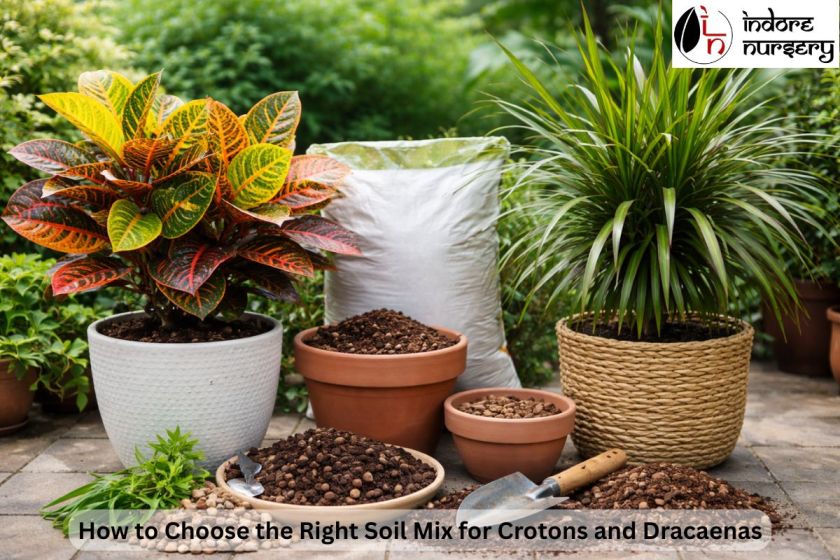
Crotons should be planted in a good mixture of soil, which consists of:
- Garden soil for structure
- Organic compost to supply soft nutrients.
- Rough sand to enhance drainage.
This combination enables the water to travel slowly and retain sufficient moisture for the roots. Moreover, compost makes the soil remain soft with time.
Tips for Croton soil care:
- Always have pots that have drainage holes.
- Turn the topsoil once a month.
- Heavy clay soil is not recommended because it holds water.
It is a problem for many individuals who purchase plants through an online nursery in Indore due to compact soil. Simple materials are usually better at mixing soil at home.
Best soil mix for dracaenas
Dracaenas are very susceptible to water. They like being wet but do not like wet soil. Accordingly, their soil must drain quicker than Croton soil.
The perfect soil combination for Dracaenas is
- Light garden soil
- Quick-draining sand or small gravel.
- A small amount of compost
This combination ensures that roots are not wet between watering. In addition, it inhibits the development of fungi that occur in wet soil.
Additional care recommendations for Dracaenas:
- Allow drying of topsoil, then water.
- Do not squeeze the soil in the pot.
- Replace old soil once a year.
Indoor outdoor plants nursery in Indore have people who grow plants and usually find that Dracaenas thrive in airy soil better than in fertile soil.
Common soil mistakes to avoid
Healthy plants may be affected even in case soil errors are repeated. These are, however, the errors that can be corrected with ease when you are aware of them.
Avoid these common mistakes:
- With garden soil only, without mixing.
- Using reused soil, which is no longer nutritious.
- Excessive compost and overloading the soil.
- Ignoring drainage holes in pots
Additionally, soil should never be mixed when wet. Moist soil is hardened and blocks the air.
How to check if your soil is right?
There are no tools required to check soil health. The plant and soil are sufficient to provide simple signs.
Healthy soil signs:
- Within several seconds, water drains out.
- Soil feels soft, not sticky.
- No bad smell from the pot
- Roots appear white or light brown.
Additionally, yellow leaves, retarded growth, or fungus on the top of soil are warning signs. However, the inspection of soil after every few weeks is useful to ensure the health of plants.
Indoor vs outdoor growing tips
Whereas Crotons and Dracaenas can thrive very well in the house, the care of the soils varies a bit depending on the location.
For indoor plants:
- Use light soil to dry quicker.
- Do not use soil that remains wet over a long period.
- Locate pots in well-ventilated places.
For outdoor plants:
- Enrich garden soil with sand.
- Protect soil from heavy rain.
- Check drainage after rainfall
Visitors to the biggest nursery in Indore are frequently educated that the soil in the field requires more attention during wet seasons.
Conclusion
The selection of soil to be used in crotons and dracaenas is not complicated; it requires attention. Healthy growth is achieved through balanced drainage, moisture, and air. Long-term plant health is based on soil. Once prepared, plants become stronger and simpler to grow as recommended by the best plant nursery in Indore.
Frequently asked questions
- Can I use the same soil mix for both Crotons and Dracaenas?
Yes, only crotons require a little less drainage to have healthy roots.
- How often should I change the soil for these plants?
The annual rotation of soil is a way to replenish the soil and enhance the health of plants.
- What happens if the soil does not drain well?
In both plants poor drainage may lead to root rot, yellow leaves, and slow growth.







Recent Comments