
Table of Contents
- Key Takeaways
- How often should you water tropical landscaping plants?
- Best practices for fertilizing tropical plants
- Common mistakes to avoid
- Seasonal watering and fertilizing tips
- Conclusion
- Frequently asked questions
Key Takeaways
- Tropical plants need a deep, regular watering to stay healthy.
- Balanced fertilization every 6–8 weeks supports foliage and flowers.
- Adjust watering and fertilizing according to seasonal changes.
- It improves soil moisture and nutrition by mulching and organic fertilizers.
- Choosing quality plants from trusted sources ensures long-term garden success.
Plants of tropical landscaping require regular attention, particularly watering and fertilizing. Healthy growth, vibrant foliage, and extended beauty are guaranteed by proper routines. Through the knowledge of the needs of these plants, you will be able to make a green garden with ease. It is easy and fun to take care of tropical plants with the help of specialists at Indorenursery.
How often should you water tropical landscaping plants?
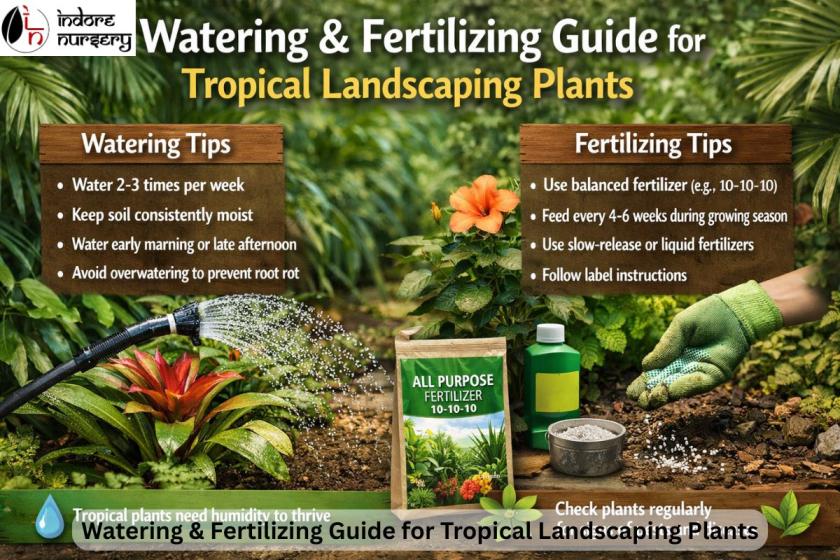
The most significant aspect of caring about tropical plants is watering. These plants are naturally found in humid conditions and therefore it is necessary to replicate the conditions in which they grow. Overwatering can cause root rot, while underwatering leads to drooping leaves and poor growth.
Watering tips:
- Measure soil moisture 12 inches under the surface. Water only if it feels dry.
- Water heavily to promote good root development.
- Watering should be done in the morning in order to minimize evaporation and avoid fungal diseases.
- The frequency is typically 2-3 times/week, depending on species, season, and type of planting.
- Plants in pots are dried out more quickly than those planted in the garden and require more care.
Moreover, mulching will maintain soil moisture and shield roots against excessive heat keeping your tropical plants healthy and growing.
Tips: Online plant nursery in Indore offers a great variety of tropical plants that can be delivered to the gardeners in Indore, who need the convenience of doing so.
Best practices for fertilizing tropical plants
Fertilizing supplements watering with providing the necessary nutrients to grow. Leaves, roots, flowers, and fruits require nitrogen, phosphorus, and potassium respectively in tropical plants.
Fertilizing guidelines:
- Slow-release fertilizers release nutrients slowly.
- Take in recommended dosages to prevent burning roots.
- Fertilize after every 6-8 weeks of active growth, decrease during dormancy.
- Natural compost or seaweed extracts are organic alternatives that make the soil healthy.
- Put it evenly on the surface of the soil and then water it to facilitate absorption.
However, certain tropical plants might require specialized nutrient treatment. The use of professionals at Indorenursery will make sure that your plants receive the right amount of nutrients without the risk of overfertilizing them.
Common mistakes to avoid
Even the experienced gardeners commit errors that are detrimental to the tropical plants. Avoid these common errors:
- Excessive watering that causes yellowing of leaves and root rot.
- Underwatering, which leads to hanging leaves and retarded growth.
- Application of high nitrogen fertilizers alone, which may inhibit flowering.
- Ignoring adequate soil drainage, suffocation of roots.
- Failure to take care of plants seasonally; plants do not need the same care during dry and wet months.
Therefore, paying attention to environmental factors and the growth phase guarantees the healthy existence of plants in the long run and the aesthetic tropical scenery.
Tips: Online outdoor plants in Indore will assist you in finding the species that will fit the style and climate of your garden.
Seasonal watering and fertilizing tips
The reaction of tropical plants varies with different seasons. Regulation of watering and fertilizing schedules is a guarantee of further well-being.
Summer care:
- Enhance watering because of increased evaporation.
- Grow faster by fertilizing frequently.
Winter care:
- Less watering to avoid waterlogging.
- Minimization of fertilization should be done unless the plant indicates active growth.
Rainy season:
- Check drainage to avoid root rot.
- Foliar feeding should be used when the soil is wet over a long time.
Dry season:
- Fertilize a lot to keep soil moist.
- Water extensively to get to underground roots and alleviate stress.
Additionally, you should find a good supplier of your plants such as the largest nursery in Indore so that you can be assured of healthy and hardy species that can adjust to the seasonal changes.
Conclusion
To preserve the tropical landscaping plants, watering and fertilization should be taken into consideration. Routine maintenance guarantees a healthy foliage, robust roots and health of the plants. Tropical gardens can be very beautiful by knowing the seasonal needs, soil conditions and nutrient requirements.
Furthermore, the specialists at Indorenursery help the gardeners to choose and take care of the plants, and tropical landscaping is easy and fulfilling.
Additionally, you can have your tropical garden blooming throughout the year with proper attention whether you like to shop from an online plant nursery or choosing the biggest nursery in Indore.
Frequently asked questions
- How do I know when tropical plants need fertilizing?
Look for pale or yellow leaves, slow growth, or lack of flowering..
- Can I use tap water for tropical plants?
Yes, but avoid water high in chlorine or salts to prevent damage.
- How much fertilizer is safe for potted tropical plants?
Take instructions on the package and use smaller doses more often.
- Should tropical plants be watered daily?
No, soil moisture and water should only be checked when the top layer is dry.
- What is the best time of day to water tropical plants?
Early morning is the best time to avoid excessive evaporation and fungal development.







Recent Comments