
Table of Contents
- Key takeaways
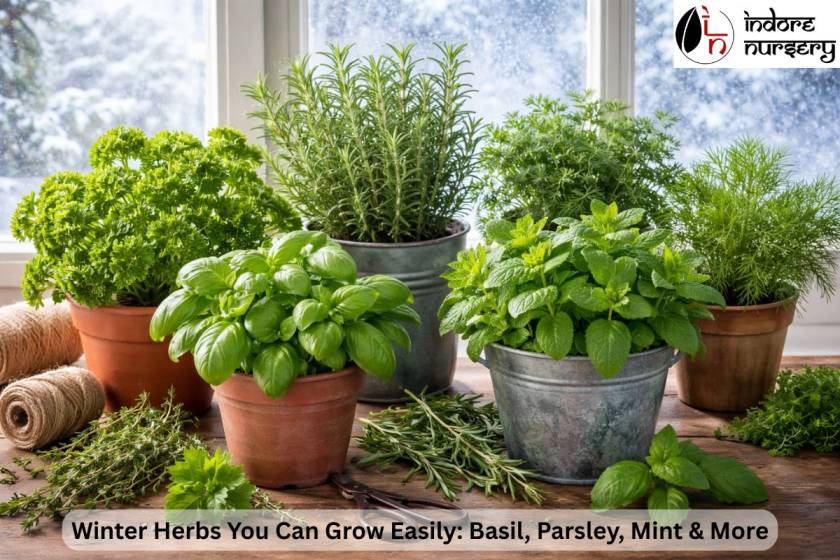
- Which herbs grow best in winter weather?
- How do you grow basil during winter months?
- Why is parsley a perfect winter herb for beginners?
- How does mint survive and grow well in winter?
- Which other herbs can you grow easily in winter?
- What soil, sunlight, and watering do winter herbs need?
- Should you grow winter herbs in pots or ground?
- How can a local nursery help you grow better herbs?
- Conclusion
- Frequently asked questions
Key takeaways
- Winter months are the best time to cultivate kitchen herbs.
- Basil, parsley, and mint are quite easy to care for in winter.
- Growing herbs in pots gives better control and healthier plants
- Quality nursery plants ensure success and prevent plant loss
Herbs that thrive well in winter, such as basil, parsley, and mint, do not require much heat or water. The majority of herbs like warm sun, colder air, and frequent attention. Therefore, winter provides the natural balance of slow and healthy growth.
Winter is the most appropriate season to begin with, in case you desire fresh herbs but do not want to work too hard. Most gardeners depend on Indore nursery to get healthy plants and growing tips since winter herbs require quality starters and easy management.
Which herbs grow best in winter weather?
There are herbs that prefer colder conditions and will grow without stress. However, the number of winter pests is reduced, and this contributes to the plants remaining healthy.
The simplest winter herbs are
- Basil
- Parsley
- Mint
- Coriander
- Fenugreek (Methi)
- Dill
Additionally, these herbs are very good in Indian winters, and they can be planted in balconies, terraces, and small gardens.
How do you grow basil during winter months?
Basil is able to grow during winter provided that it is not exposed to extreme cold. Basil is a warm-blooded plant, but it can adjust to sunny winter days.
Simple winter basil care:
- Put the pot in the area that receives 4-5 hours of sunlight.
- Use loose, well-drained soil.
- Water when the surface soil is dry.
- Avoid cold winds at night.
Moreover, it is recommended to trim basil on a regular basis to make it grow bushy and fresh. Most home gardeners purchase starter plants at Indorenursery due to the fact that strong roots enhance winter survival.
Why is parsley a perfect winter herb for beginners?
Parsley is slow growing and remains strong during winter. Hence, novices can easily cope with it.
The reason parsley thrives in winter:
- Tolerates cold weather
- Needs less sunlight
- Grows well in pots
- Rarely attracts pests
Moreover, Parsley likes wet soil and dislikes waterlogging. Moreover, frequent cutting of leaves enhances growth and flavor.
How does mint survive and grow well in winter?
Mint is a very hardy herb, and it grows even when there is little care. Nevertheless, it is significant to control its dispersion.
Mint winter growing tips:
- Always cultivate mint in containers.
- Keep soil slightly moist.
- Provide morning sunlight.
- Trim regularly.
Furthermore, mint is quick growing and heals quickly; thus, it is suitable in winter kitchens. The mint is a highly successful plant that many gardeners who buy plants in the best plant nursery in Indore prefer.
Which other herbs can you grow easily in winter?
Other than basil, parsley, and mint, there are other herbs that grow silently throughout winter.
Other easy winter herbs:
- Coriander: Quick and easy to grow in the kitchen.
- Fenugreek: It grows in shallow pots.
- Dill: Requires light sunlight and loose soil.
- Chives: Winter growth is slow and steady.
Furthermore, these herbs require minimal attention and offer new tastes during the season.
What soil, sunlight, and watering do winter herbs need?
Winter herbs do not require intricate treatment. Nevertheless, consistency is significant.
Soil requirements:
- Loose texture
- Good drainage
- Organic compost mixed
Sunlight needs:
- 3–5 hours daily
- Prefer morning sun
Watering rules:
- Water when the soil is dry.
- Avoid wet roots.
- Water less on foggy days.
Additionally, the knowledge of the basic needs prevents the damage of roots and slow growth.
Should you grow winter herbs in pots or ground?
The majority of winter herbs are more suitable in pots. Pots are used to regulate moisture and temperature of soil.
Pot growing benefits:
- Movement is easy on cold nights.
- Better drainage
- Less pest attacks
Moreover, people who place orders in an online nursery in Indore usually choose pots since there is little space in urban houses.
How can a local nursery help you grow better herbs?
Plants that are healthy are more important than the costly equipment. A good nursery offers good roots, proper plant variety, and professional advice.
The reasons why nursery plants are superior:
- Disease-free
- Season-ready
- Strong root systems
Therefore, ordering from the online outdoor plants in Indore saves time, and the plants are delivered at the doorstep, which helps beginners to start with a lot of confidence.
Conclusion
It is easy, fulfilling, and cost-effective to grow herbs during winter. Herbs such as basil, parsley, and mint can be used with basic care to give a fresh taste each day. Additionally, winter minimizes pests and water requirements; thus, gardening is stress-free.
The selection of quality plants at Indorenursery assists amateurs and advanced gardeners to produce better results. Hence, begin small, be regular, and taste fresh winter herbs that grow directly in the house.
Frequently asked questions
- Do winter herbs need direct sunlight every day?
Yes, the majority of winter herbs require at least 4 hours of sunshine every day.
- Can winter herbs grow well in small balcony spaces?
Yes, winter herbs are easy to grow in small pots and do not require much space.
- Is pruning important for winter herb growth?
Yes, frequent pruning keeps herbs in healthy condition and promotes the growth of new leaves.
- Which winter herb grows fastest at home?
Mint thrives best in winter and needs minimal attention to survive.








Recent Comments