
Table of Contents
- Key takeaways
- Understanding plant propagation
- How does winter support healthy root growth?
- Lower pest problems during winter
- Better control for indoor and outdoor plants
- Best plants to propagate in winter
- Expert tips for successful winter propagation
- Conclusion
- Frequently asked questions
Key takeaways
- The winters enable plant root growth and the absence of stress and imbalance of water.
- This is because there are fewer pests during the winter months. This will ensure the process for propagating plants becomes safer and
- This is because winter is characterized by slower rates of plant growth.
- Winter-navigated plants will be healthier and will grow faster due to increased sunlight.
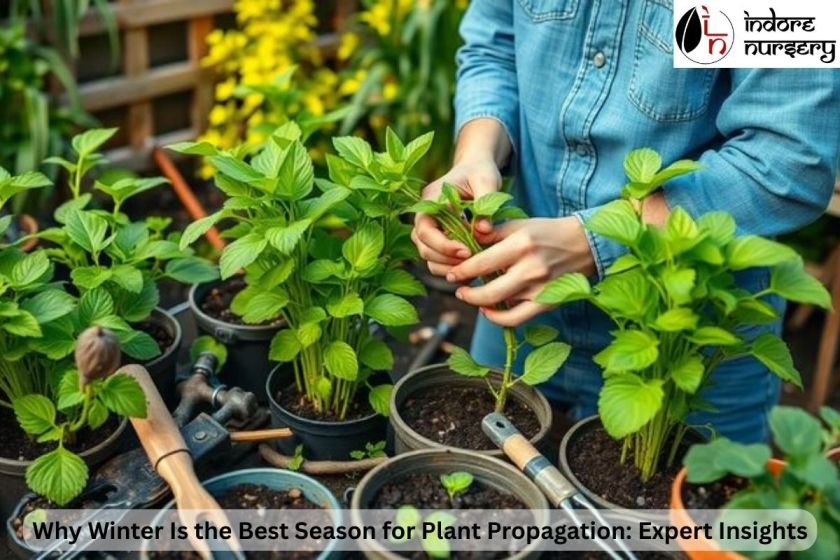
One of the most rewarding activities of plant lovers is plant propagation. It enables you to propagate new plants using the existing ones and have a healthier green area. Most individuals think that spring is the best season, but the professionals usually claim that winter is more productive. Plants decelerate during winter, and this causes roots to develop without straining. However, propagation during winter is more predictable and reliable.
Most gardeners visiting the best plant nursery in Indore also get to know that winter has the appropriate temperature and moisture. Besides, this season enables plants to be well prepared to grow rapidly in spring. Knowing the reasons why winter is the best would enable you to achieve greater success with minimal effort.
Understanding plant propagation
Plant propagation is the cultivation of new plants using seeds, cuttings, or roots. It is a process that requires a lot of dependence on climate, soil condition, and care routine. Plants do not grow very fast during the winter, but this is not bad because they grow slowly. The roots grow silently as the top growth lies.
Furthermore, propagation in winter minimizes plant shock. Cuttings are more concerned with root formation, as no heat or sunlight pressure hits them suddenly. Consequently, plants are made stronger and healthier by the time it reaches warmer months. Experts usually advise beginners to propagate during winter since it is easy to handle.
How does winter support healthy root growth?
The most significant aspect of propagation is the root development. Soil remains cool and moist longer during winter. However, roots receive an adequate time to develop deep and stable. In contrast to summer, water loss is reduced because of the heat, and this maintains the soil conditions at equilibrium.
Additionally, most gardeners who subscribe to services such as an online nursery in Indore use winter propagation since plant cuttings do not wither fast. This controlled condition prevents root damage. Winter air is cooler, and it does not cause the new plants to be stressed. Good roots developed during winter allow faster growth in the future.
Lower pest problems during winter
Pest control is one of the greatest problems in the propagation of plants. During the hot weather, diseases and insects propagate quickly. But these difficulties are inherently decreased by winter. Low temperatures reduce the activity of pests, which is more convenient for protecting young plants.
Moreover, the reduced number of pests implies the reduced chemical treatment. This makes plants healthier and more natural. People usually claim that winter propagation is safer, as plants are able to grow without being threatened all the time. Therefore, gardeners will be able to concentrate on the care and minimize the damage control.
Better control for indoor and outdoor plants
Winter enables the management of indoor and outdoor plants better. The fact that the growth is slow means that moisture, light, and temperature can be closely monitored. This comes in handy particularly to individuals who are planting in small areas.
Those who manage an indoor outdoor plants nursery in Indore usually choose winter as a propagation season. The indoor plants receive stable room temperatures, whereas the outdoor plants are shielded against the intense sunlight.
Moreover, it is easier to move plants in winter since the level of stress is minimal. This measure enhances the survival rates.
Best plants to propagate in winter
Winter propagation does not have an equal effect on all plants. Nevertheless, numerous popular types thrive well at this time of year. Perennial plants that are cool weather or dormant perform well.
The following are some of the popular options:
- Spring-blooming flowering plants.
- Slowly growing, steadily growing herbs.
- Strong-stem shrubs and climbers.
- Some indoor plants that are well adjusted to the winter season.
Furthermore, these plants have a good start in winter propagation. In the spring they are prepared to increase more and flower more.
Expert tips for successful winter propagation
The professionals recommend some simple measures to achieve the best results during winter. The process is slow, but paying special attention is significant.
Helpful tips include:
- Take clean and sharp cuttings.
- Do not make soil too wet.
- Locate plants in areas with soft sunlight.
- Roots do not grow quickly; therefore, avoid overwatering.
- Cover outdoor plants with frost when necessary.
Additionally, patience is essential. The propagation in winter is slow, but the outcomes are long-term. Hence, patient care is more valuable than immediate outcomes.
Conclusion
The winter might seem silent in the garden, but it is in fact a strong time of plant reproduction. Slow growth assists roots to grow stronger and eliminates the frequent issues such as pests and water loss. In addition, plants are less subjected to stress and better prepared to grow in spring.
Gardeners affiliated themselves with the finest online nursery of plants in Indore, and those who concentrate on seasonal plants in Indore tend to be more successful when they propagate in winter.
Therefore, the propagation season in winter is a clever and viable choice in order to have healthy and durable plants.
Frequently asked questions
- Why is winter ideal for plant propagation?
Winter permits minimal root development, reduced stress, reduced pests, and enhanced moisture control of plants.
- Can beginners try plant propagation during winter?
Yes, the beginners can propagate easily in winter since the plants are slow-growing and require less care.
- Which plants grow well when propagated in winter?
Plants that propagate in winter suitably include many flowering plants, herbs, shrubs, and cool-season plants.









Recent Comments