
Table of Contents
- Key takeaways
- Less sunlight is a big problem
- Overwatering during cold days
- Cold air and sudden temperature change
- Dry air inside homes
- Poor drainage and wrong pots
- Not changing plant care routine
- Simple fixes to keep plants healthy
- Conclusion
- Frequently Asked Questions
Key takeaways
- Indoor plants are most affected during winter because of low light, waterlogging, low air temperatures, and dry indoor air.
- To avoid root and leaf rot, watering can be done less and plants relocated.
- A stable temperature and humidity level helps to keep the plants healthy even in colder weather.
- Small changes in care can help houseplants survive the winter months and grow well when spring arrives.
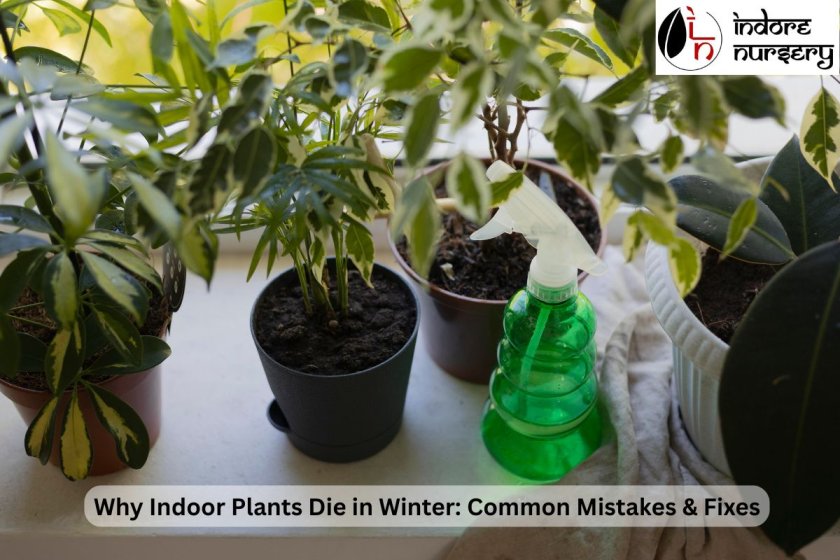
We find winter chilly and comfortable, but to the indoor plants, it is a challenging season. During cold months, many of them observe their healthy plants turning yellow, weak, or dry. This makes it very important to know why your winter plants die and how to correct it to make them grow again as a plant lover.
Moreover, even though plants remain indoors, winter has numerous impacts on them. Indoor care varies according to the seasons, and this is the main problem that people who purchase plants at an online plant nursery in Indore usually experience. Nevertheless, plants can survive winter quite easily with the proper treatment and minor adjustments.
Less sunlight is a big problem
During winter days are short and the sunlight is weak. Consequently, plants fail to receive sufficient light to produce food. This retards their development and renders them feeble.
Common mistakes
- Plants should be kept away at a distance.
- Covering the windows with curtains.
- Plants that do not rotate to receive the same light.
Simple fixes
- Plants should be located close to bright windows.
- Clean window glass to get more light.
- Turn plants every few days.
Furthermore, the indoor plants purchased online as indoor plants in Indore normally require good indoor light, particularly during winter.
Overwatering during cold days
Overwatering is one of the largest causes of death of plants during winter. Even though plants do not grow as fast during winter, many people water them as they do during summer.
What goes wrong?
- Soil stays wet for too long.
- Roots start to rot.
- Leaves turn yellow or fall.
What should you do?
- Check soil before watering.
- Water when the topsoil is dry.
- Reduce watering schedule.
However, with a minimum of water, but with caution, plants are protected.
Cold air and sudden temperature change
Plants hate sudden cold air. Though the heaters keep the rooms warm, cold air that flows through the windows and doors can damage the plants severely.
Common problems
- Having greenery close to the windows during the night.
- Plants should not be kept close to air conditioners.
- Sudden temperature drops
Easy solutions
- Relocate plants out of cold air.
- Maintain room temperature at 18°C.
- Plants should not be placed close to doors.
Furthermore, the plants of the biggest nursery in Indore are invariably healthy and yet require a good winter position.
Dry air inside homes
It is dry in winter, and heaters dry out rooms. This causes loss of water by the plant leaves, making them dry.
Signs of dry air
- Brown leaf edges
- Curling leaves
- Slow growth
Helpful fixes
- Lightly spray water on leaves.
- Have a bowl of water beside plants.
- Group plants together.
Moreover, moisture is important to keep plants breathing in winter.
Poor drainage and wrong pots
Bad drainage damages even though the watering is lessened during the winter. Roots are rotted gradually by water in pots.
Mistakes people make
- Using pots without holes
- Keeping water in trays
- Using heavy soil
Right steps
- Always put pots with holes.
- Empty trays after watering
- Use light, airy soil.
Therefore, proper drainage makes roots healthy and strong.
Not changing plant care routine
Most of them forget that plants require alternative care during winter. Nevertheless, winter demands summer rules, which makes it stressful.
Common care mistakes
- Using fertilizer too often
- Unnecessary pruning of plants.
- Repotting in cold months.
Correct winter care
- Stop or reduce fertilizer.
- Avoid cutting leaves.
- Repot until spring.
Additionally, plants sleep during winter; hence, the less disturbance, the better.
Simple fixes to keep plants healthy
Here is a quick summary table for easy understanding:
| Problem | Mistake | Simple Fix |
| Low light | Poor placement | Move near windows |
| Overwatering | Same routine | Reduce water |
| Cold air | Draft exposure | Change location |
| Dry air | No humidity | Light misting |
| Bad drainage | Wrong pots | Use proper soil |
These small steps make a big difference in winter plant care.
Conclusion
The winter does not spell death to your indoor plants. After having known the mistakes and correcting them in a proper manner in a cold month, it is easy to protect them. Despite the challenges presented by cold weather, plants can remain healthy with the help of simple care changes.
However, indoor plants should always be adjusted depending on the change of seasons by people who purchase plants on an online plant nursery in Indore, people who order online indoor plants in Indore, or people who visit the largest nursery in Indore. Therefore, patience, attention, and gentle care can keep your indoor plants green and happy during the winter.
Frequently Asked Questions
- Why do indoor plants struggle more during winter months?
Low sunlight, cold air, dry indoor conditions, and overwatering errors retard the growth of indoor plants.
- Is overwatering more harmful to plants in winter?
Yes, root rot comes about as a result of excess water since soil dries gradually in colder seasons.
- How can I improve sunlight for indoor plants in winter?
Plants should be placed close to bright windows, and the glass should be wiped frequently, and the pots should be turned to ensure equal exposure to light.
- Does indoor heating affect plant health during winter?
Indoor air heating dries up the indoor air and eliminates moisture on leaves and strains indoor plants.
- Should fertilizer be used for indoor plants in winter?
No, the majority of indoor plants sleep in winter and do not require fertilizer at this time.







Recent Comments